Source: Chullin 122a · Category: Rules of Life
The Gemara in Chullin 122a states that human skin is tahor d’oraisa. However, the Rabanan made it tamei to protect against the concern that people might make the skins of their mother or father into spreads to cover chairs or beds. This would, obviously, be a major violation of the halacha to respect one’s parent.
Chullin 122a:13 · Sefaria
גמ׳ אמר עולא דבר תורה עור אדם טהור ומה טעם אמרו טמא גזירה שמא יעשה אדם עורות אביו ואמו שטיחין
GEMARA: The first clause of the mishna teaches that the skin of a dead person imparts impurity like his flesh. With regard to this, Ulla says: The skin of a dead person is pure by Torah law; and what is the reason that the Sages said that it is impure? It is a rabbinic decree lest a person fashion mats from the skins of his deceased father and mother.
Text: Wikisource Talmud Bavli, CC-BY-SA / William Davidson Edition - English, CC-BY-NC. Via Sefaria.
Chullin 122a · Vilna Shas
Romm Vilna edition, 1880–86. Scan: National Library of Israel, via Sefaria. Full page
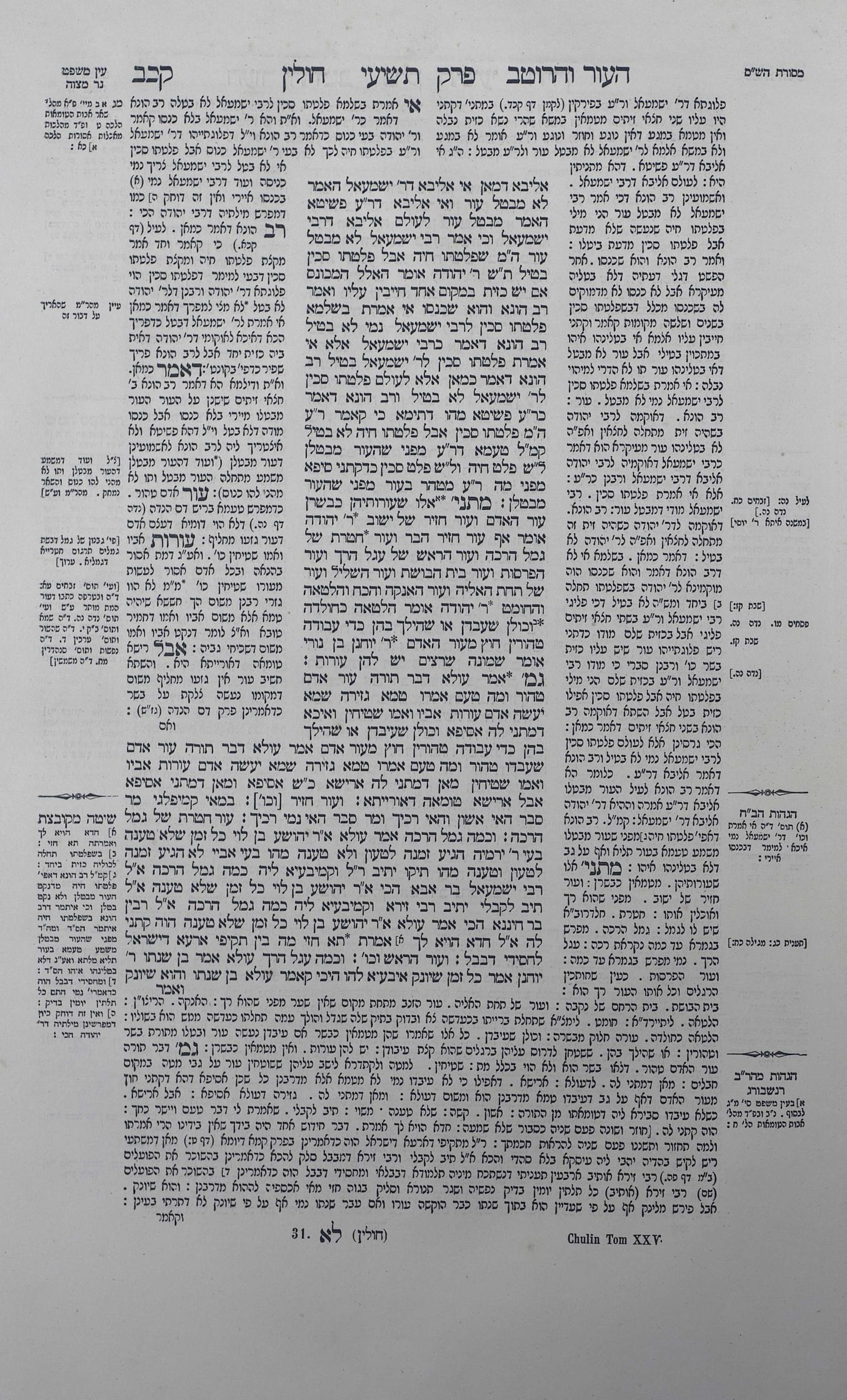
Tosfos
Tosfos wonders why the Gemara even has to resort to the possibility that one might do this to the skins of their parents. There is still a D’oraisa prohibiting deriving benefit from a corpse, regardless of who it is.
Tosafot on Chullin 122a:13:2 · Sefaria
עורות אביו ואמו שטיחין כו' - ואע"ג דמת אסור בהנאה ובכל אדם אסור לעשות מעורו שטיחין כו' מ"מ לא הוו גזרי רבנן משום הך חששא שיהיה טמא אלא משום אביו ואמו דחמיר טובא וא"צ לומר דנקט אביו ואמו משום דשכיחי גביה:
Text: Vilna Edition, Public Domain. Via Sefaria.
Another explanation
Others explain that because people are fond of their parents, they might use the skin (because it was tahor) to preserve it and eulogize them for a prolonged period. To prevent this misguided practice, human skin was declared Tamei.